Are Protein Pop-Tarts Healthy? Pop-Tarts are a deeply nostalgic food, first introduced in the 1960s, a time when there was a major cultural shift toward convenience foods and very little public awareness about sugar, fibre, or balanced meals. Despite decades of changing nutrition advice and diet trends, they’ve maintained remarkable staying power and nostalgic appeal across multiple generations.
It’s not surprising, then, that Pop-Tarts would eventually fall victim to the protein trend, just as many other nostalgic foods from our childhood have. But are Protein Pop-Tarts healthy? Or just another protein-washed junk food? Today, I’ll review the nutrition facts and ingredients tohelo you make an informed choice.
A quick note before we get going: if you like this post, you’ll love my weekly newsletter, The Grocery Edit. Each week, I break down food products, industry trends, and label-reading tips, and share evidence-based insights on the food system. You can subscribe to The Grocery Edit on Substack here.
Original Pop-Tart Nutrition Profile
First, let’s look at the original Pop-Tart to identify any key differences in the protein version.
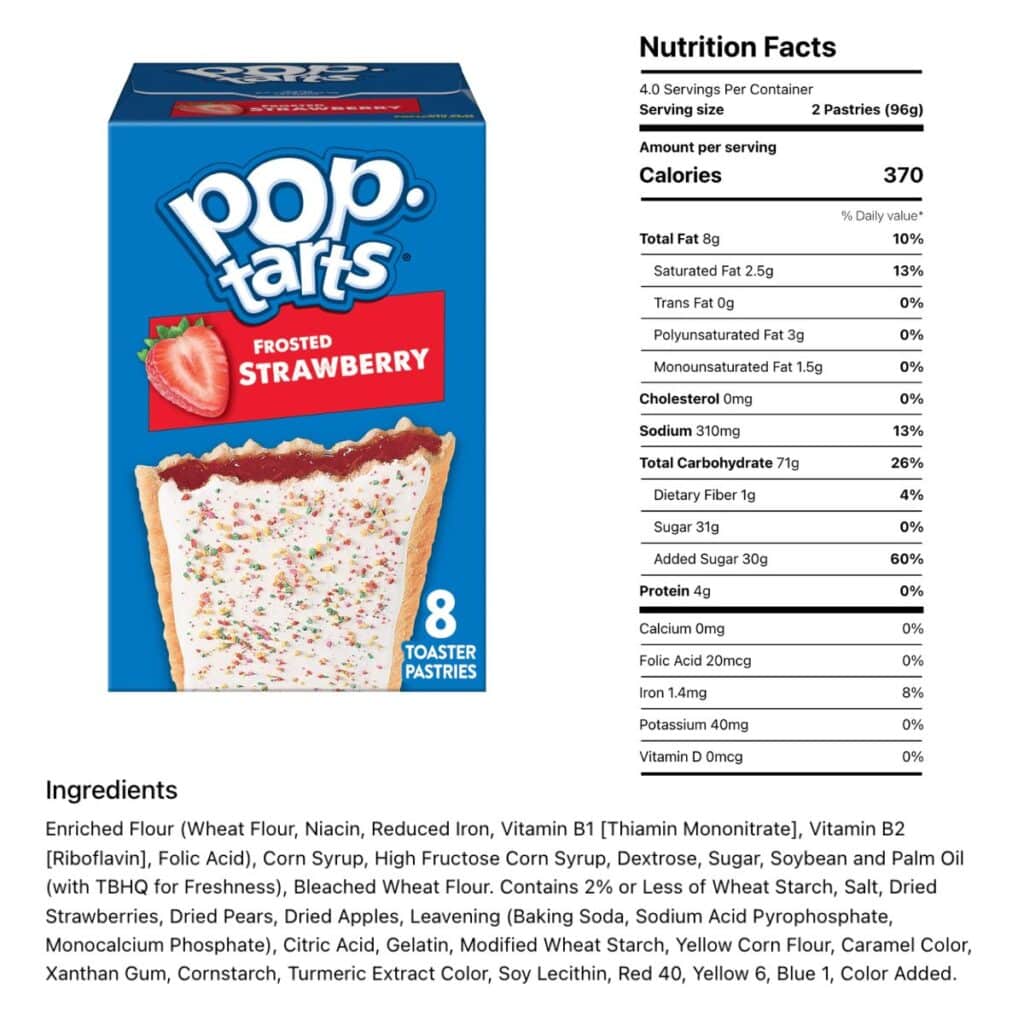
Nutritionally, Pop-Tarts are high in total carbohydrates and added sugars, coming primarily from enriched flour and multiple sugar sources. A serving of two Pop-Tarts contains 71 g of total carbohydrate, primarily from enriched flour, corn syrup, high fructose corn syrup, dextrose, and table sugar. This includes 31 g of sugar. They also provide 8 g of fat, and 2.5 g of saturated fat from soybean and palm oils, and a modest 4 g of protein that occurs naturally in the ingredients. A serving also provides 310 mg of sodium from added salt.
In addition, they contain a long list of additives, including leavening agents (baking soda, sodium acid pyrophosphate and monocalcium phosphate), citric acid, xanthan gum, soy lecithin, and artificial colours.
Protein Pop-Tarts Nutrition Profile
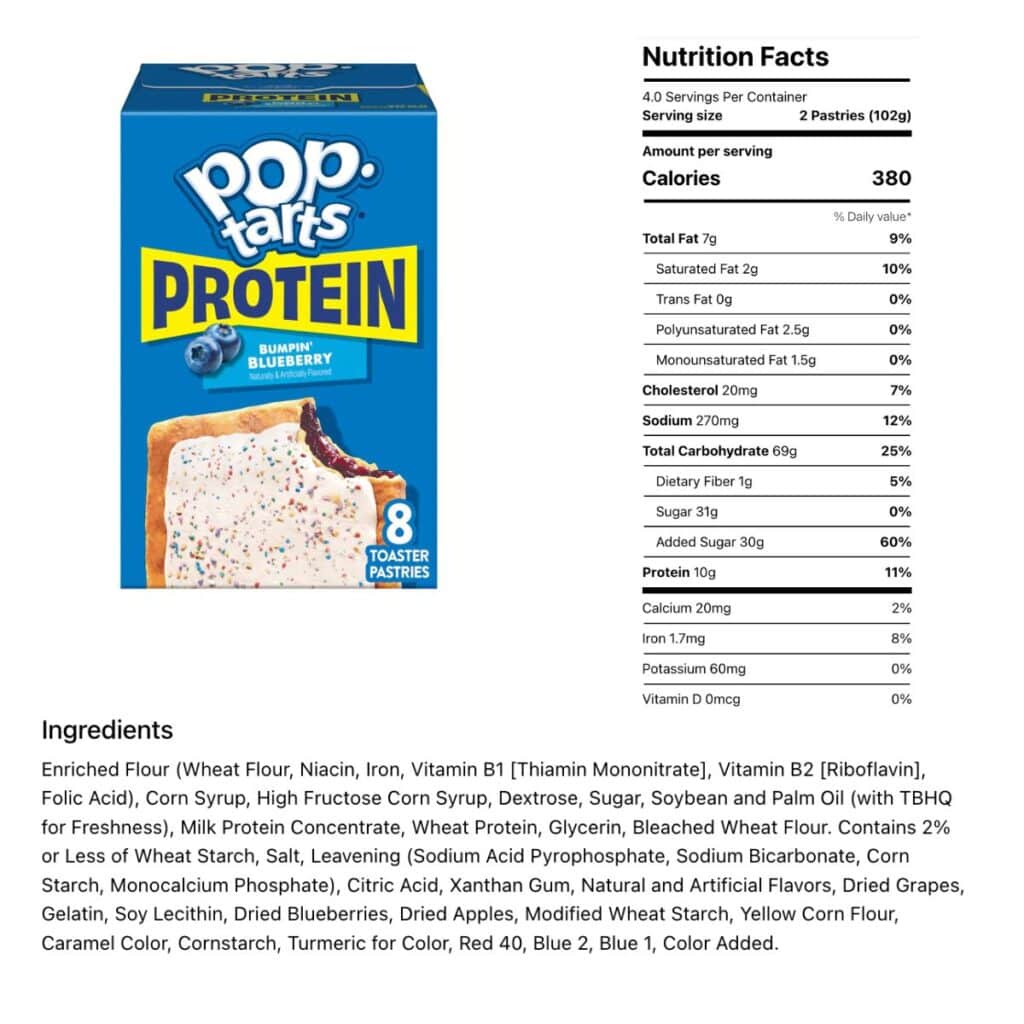
The new Protein Pop-Tarts differ from other protein pop-tart products on the market in one key way: they haven’t been reformulated to be low in sugar or net carbs. They’re essentially the original Pop-Tarts, with added protein.
In addition to the original ingredients, the protein version includes added milk protein concentrate and wheat protein, bringing the protein content to 10 g per two pastries, about 6 g more per serving than the original. Otherwise, the formulation remains very similar to the original product described above, including its carbohydrate, sugar, and fat profile.
Are Protein Pop-Tarts Healthy?
Protein Pop-Tarts receive a nutrition score of 20 out of 100, meaning you should select an alternative.
This is a clear example of how marketing can create excitement around a new product, even when the underlying nutrition remains largely the same. In reality, all they’ve done here is add a minuscule 3 g of protein per pastry and slapped “PROTEIN” on the label in hopes of catching the wave.
Protein pop-tarts remain high in sugar, low in fibre, and contain many ultra-processed ingredients. In addition, they do not contain nutrients that support a healthy dietary pattern.
Protein is not a miracle worker. Let’s be honest, the problem with the original Pop-Tarts isnt that they’re low in protein. It’s that these pastries are used as a breakfast in the first place. In doing so, they displace nutrient-dense foods that provide protein and other nutrients — like eggs, Greek yogurt, milk, fruit, and whole-grains. Simply adding protein to an already suboptimal food doesn’t fix it; it’s a protein band-aid.